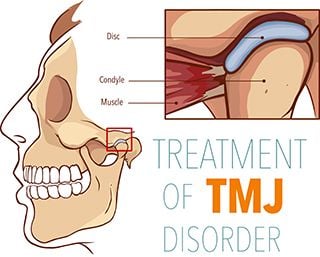
 The temporomandibular joints (TMJ) connect the temporal bones on each side of the skull to the mandible, or lower jawbone. These complex, hinge-like joints allow the mouth to open and close, move back and forth, and slide from side to side. Muscle, bone, and cartilage work together for easy and comfortable facial movement so we can speak, eat, swallow, yawn, and smile.
When the joint doesn’t function as smoothly as it should, the limited movement and discomfort that result could be caused by Temporomandibular Joint Disorder, or TMD.
Temporomandibular Joint Disorder can develop due to arthritis, bruxism (tooth grinding), genetics, an injury or infection near the jaw, a misaligned bite, or a combination of factors. Sometimes the cause is unclear. TMD could be indicated if you suffer from any of these symptoms:
- Painful chewing
- Persistent pain and discomfort around the TMJ or in the face or neck
- Earaches or ringing in the ears
- Changes in bite alignment
- Muscle spasms near the jaw
- Clicking, popping, or grating noises when the jaw moves
- Jaws that are limited in movement or lock open or shut
If you suspect you might have TMD, your dentist or doctor will conduct a careful examination of your temporomandibular joints, their range of movement, and your head and neck. When needed, imaging studies can be used for further examination of the joint.
TMD Treatments
Often, conservative treatment is effective in treating TMD. Your dentist or doctor will tailor treatment to the cause and symptoms of your TMD:
- Use of over-the-counter pain relievers, ice packs, and moist heat compresses
- Behavior modification for habits which can cause jaw pain (gum chewing, jaw clenching, nail biting, poor posture)
- Techniques for relaxation and stress relief
- Muscle relaxants, corticosteroids, or anti-inflammatory medication
- Physical therapy
- A custom-fitted mouthguard, bite plate, or bite splint to protect teeth and jaw from the pressures of tooth grinding
- Dental treatment to improve minor bite misalignment
- Orthodontic treatment to treat more serious bite misalignment
If necessary, surgical procedures can provide more extensive examinations and treatment. These include:
- Arthroscopy: A minimally invasive procedure performed under anesthesia, which uses a thin tube with a video lens and light inserted through a small incision in front of the ear. This technology allows the surgeon to get a close look at the joint and the area surrounding it. Arthroscopic surgery can repair some types of TMJ damage.
- Arthroplasty: Surgery performed under anesthesia can repair, replace, or reposition damaged parts of the joint. Arthroplasty can be used to remove bony growths, repair or replace the articular disc that cushions your joint, and access areas that an arthroscopy can’t.
Jaw pain isn’t always due to TMD, and many cases of TMD are temporary. But frequent discomfort, limited movement, or any other persistent symptoms are a good reason to see your dentist or doctor for a thorough examination and diagnosis. Prompt treatment will help prevent further damage to the joint and make facial and jaw movement comfortable once again.